about project
about project
Launching Pizza Hut's Americas Plateform
Launching Pizza Hut's Americas Plateform
Launching Pizza Hut's Americas Plateform
Led the design implementation of Pizza Hut’s web and app experience across Mexico, Canada, and Puerto Rico—adapting a global platform to local market needs while preserving a consistent core experience.
Led the design implementation of Pizza Hut’s web and app experience across Mexico, Canada, and Puerto Rico—adapting a global platform to local market needs while preserving a consistent core experience.
Led the design implementation of Pizza Hut’s web and app experience across Mexico, Canada, and Puerto Rico—adapting a global platform to local market needs while preserving a consistent core experience.
✦ 3 markets ✦ 3 websites ✦ 3 apps
✦ 3 markets
✦ 3 websites ✦ 3 apps
The opportunity
Pizza Hut Global created a new web and app platform designed to become the foundation of its global digital ordering experience globally.
Following successful launches of the platform in established European markets, the next objective was to bring the platform into the Americas.
The challenge was to scale one global platform across distinct markets while preserving a consistent core experience and adapting to local requirements, behaviors, and cultural expectations.
My role
I led product design across the full market launch lifecycle. From identifying market specific needs and planning the implementation, through design and development, to launch and post launch iteration.
I partnered with market teams, product, engineering, research, analytics, and design to understand existing experiences, identify gaps, configure the core platform around local requirements, and support implementation through QA and release.
A key part of my role was deciding what should remain globally consistent, what needed to adapt, and how those adaptations could fit within the existing platform and design system.

1 — Understand
✧ Understand the market before changing the experience
✧ Understand the market before changing the experience
Each implementation began with a review of the market’s existing digital experience and a comparison against the core Maverick platform.
I created UX parity audits to map what customers experienced today with what would change in the new platform, and calling out market specific gaps or requirements needed to be addressed for launch.
These audits became alignment tools for product and market stakeholders to help us align and resolve requirements before implementation rather than discovering them during launch.
The challenge
Each market brought unique requirements across menu structure, product configuration, language, loyalty, content, and operations. The challenge was determining which needs could be supported by the core platform and which required the experience to adapt.
✦Takeaway
Understand the current experience first, then design the delta.
Each implementation began with a review of the market’s existing digital experience and a comparison against the core Maverick platform.
I created UX parity audits to map what customers experienced today with what would change in the new platform, and calling out market specific gaps or requirements needed to be addressed for launch.
These audits became alignment tools for product and market stakeholders to help us align and resolve requirements before implementation rather than discovering them during launch.
The challenge
Each market brought unique requirements across menu structure, product configuration, language, loyalty, content, and operations. The challenge was determining which needs could be supported by the core platform and which required the experience to adapt.
✦Takeaway
Understand the current experience first, then design the delta.
Each implementation began with a review of the market’s existing digital experience and a comparison against the core Maverick platform.
I created UX parity audits to map what customers experienced today with what would change in the new platform, and calling out market specific gaps or requirements needed to be addressed for launch.
These audits became alignment tools for product and market stakeholders to help us align and resolve requirements before implementation rather than discovering them during launch.
The challenge
Each market brought unique requirements across menu structure, product configuration, language, loyalty, content, and operations. The challenge was determining which needs could be supported by the core platform and which required the experience to adapt.
✦Takeaway
Understand the current experience first, then design the delta.
2 — Configure
✧ Configure the core journey around market needs
Localization & Homepage
For each market, the platform needed to feel locally relevant while still operating within the same core experience. I configured multi-language support, regional imagery, and homepage content to align with market expectations and our content standards.
Research helped us understand how customers expected to localize and what information they used to connect to a store. This allowed us to tailor the experience with greater confidence and distinguish simple content changes from deeper market-specific needs.
✦ Takeaway
Localization is more than translation; the experience should reflect how customers in each market expect the product to work.
Localization & Homepage
For each market, the platform needed to feel locally relevant while still operating within the same core experience. I configured multi-language support, regional imagery, and homepage content to align with market expectations and our content standards.
Research helped us understand how customers expected to localize and what information they used to connect to a store. This allowed us to tailor the experience with greater confidence and distinguish simple content changes from deeper market-specific needs.
✦ Takeaway
Localization is more than translation; the experience should reflect how customers in each market expect the product to work.
Localization & Homepage
For each market, the platform needed to feel locally relevant while still operating within the same core experience. I configured multi-language support, regional imagery, and homepage content to align with market expectations and our content standards.
Research helped us understand how customers expected to localize and what information they used to connect to a store. This allowed us to tailor the experience with greater confidence and distinguish simple content changes from deeper market-specific needs.
✦ Takeaway
Localization is more than translation; the experience should reflect how customers in each market expect the product to work.

2 — Configure
Menu
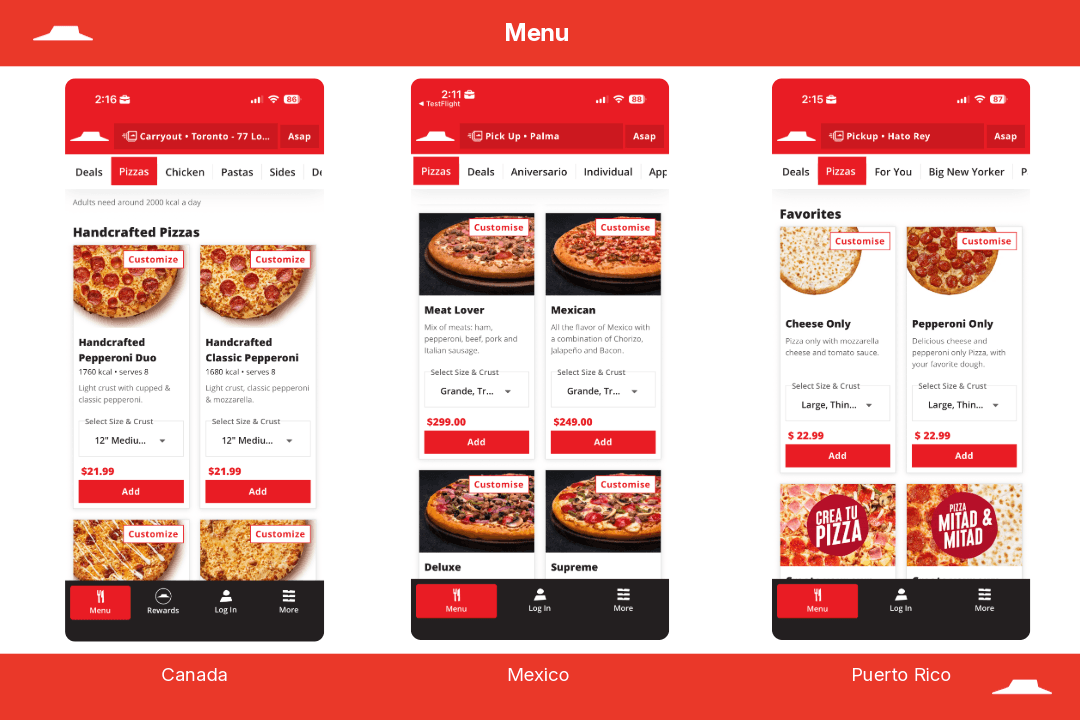
Each market had its own menu structure, products, modifiers, and ordering rules that needed to be configured within the shared platform.
I worked with market teams to adapt these menu experiences while preserving consistent interaction patterns across the product. I also reviewed product imagery and photography to ensure it met platform content standards and remained clear and consistent across devices.
✦ Takeaway
Local menus can vary significantly, but the way customers browse, understand, and configure products should remain predictable.
Menu
Each market had its own menu structure, products, modifiers, and ordering rules that needed to be configured within the shared platform.
I worked with market teams to adapt these menu experiences while preserving consistent interaction patterns across the product. I also reviewed product imagery and photography to ensure it met platform content standards and remained clear and consistent across devices.
✦ Takeaway
Local menus can vary significantly, but the way customers browse, understand, and configure products should remain predictable.
Menu
Each market had its own menu structure, products, modifiers, and ordering rules that needed to be configured within the shared platform.
I worked with market teams to adapt these menu experiences while preserving consistent interaction patterns across the product. I also reviewed product imagery and photography to ensure it met platform content standards and remained clear and consistent across devices.
✦ Takeaway
Local menus can vary significantly, but the way customers browse, understand, and configure products should remain predictable.
2 — Configure
Basket & Checkout
Each market had its own payment methods, taxes, fees, and checkout requirements that needed to work within the shared platform.
I partnered with market teams to understand these local rules and configure the checkout experience accordingly, while preserving familiar interaction patterns and a consistent path to purchase.
✦ Takeaway
Keep the checkout journey consistent while adapting the details that vary by market.
Basket & Checkout
Each market had its own payment methods, taxes, fees, and checkout requirements that needed to work within the shared platform.
I partnered with market teams to understand these local rules and configure the checkout experience accordingly, while preserving familiar interaction patterns and a consistent path to purchase.
✦ Takeaway
Keep the checkout journey consistent while adapting the details that vary by market.
Basket & Checkout
Each market had its own payment methods, taxes, fees, and checkout requirements that needed to work within the shared platform.
I partnered with market teams to understand these local rules and configure the checkout experience accordingly, while preserving familiar interaction patterns and a consistent path to purchase.
✦ Takeaway
Keep the checkout journey consistent while adapting the details that vary by market.

2 — Configure
Fulfillment
Each market needed delivery, carryout, location selection, address entry, and order tracking to work reliably across local behaviors and supported languages.
I worked with market teams to validate these journeys, adapt them where needed, and ensure customers could move through fulfillment consistently regardless of market or language.
✦ Takeaway
Keep fulfillment familiar, while adapting the details that reflect how customers actually order in each market.
Fulfillment
Each market needed delivery, carryout, location selection, address entry, and order tracking to work reliably across local behaviors and supported languages.
I worked with market teams to validate these journeys, adapt them where needed, and ensure customers could move through fulfillment consistently regardless of market or language.
✦ Takeaway
Keep fulfillment familiar, while adapting the details that reflect how customers actually order in each market.
Fulfillment
Each market needed delivery, carryout, location selection, address entry, and order tracking to work reliably across local behaviors and supported languages.
I worked with market teams to validate these journeys, adapt them where needed, and ensure customers could move through fulfillment consistently regardless of market or language.
✦ Takeaway
Keep fulfillment familiar, while adapting the details that reflect how customers actually order in each market.

2 — Configure
Loyalty
Each market had its own loyalty goals, earning rules, rewards, offers, and program integrations that needed to fit within the shared platform.
I worked with market teams to translate those requirements into a consistent loyalty experience, adapting point systems, redemption flows, and promotional content while preserving the core interaction patterns.
✦ Takeaway
Keep the loyalty experience familiar while adapting the rules and rewards that make each market’s program unique.
Loyalty
Each market had its own loyalty goals, earning rules, rewards, offers, and program integrations that needed to fit within the shared platform.
I worked with market teams to translate those requirements into a consistent loyalty experience, adapting point systems, redemption flows, and promotional content while preserving the core interaction patterns.
✦ Takeaway
Keep the loyalty experience familiar while adapting the rules and rewards that make each market’s program unique.
Loyalty
Each market had its own loyalty goals, earning rules, rewards, offers, and program integrations that needed to fit within the shared platform.
I worked with market teams to translate those requirements into a consistent loyalty experience, adapting point systems, redemption flows, and promotional content while preserving the core interaction patterns.
✦ Takeaway
Keep the loyalty experience familiar while adapting the rules and rewards that make each market’s program unique.

3 — Govern
✧ Govern and adapt without fragmenting the core platform
With multiple markets requesting new features and behaviors, the challenge was deciding what should remain market-specific and what deserved to become part of the core platform.
I first looked for existing patterns that could solve the need. When a new behavior was proposed, I challenged it through research, analytics, or testing before introducing additional platform complexity.
This helped preserve consistency across markets, reduce one-off solutions, and keep the product easier to maintain as it scaled.
✦ Takeaway
Standardize by default. Adapt when evidence justifies it.
With multiple markets requesting new features and behaviors, the challenge was deciding what should remain market-specific and what deserved to become part of the core platform.
I first looked for existing patterns that could solve the need. When a new behavior was proposed, I challenged it through research, analytics, or testing before introducing additional platform complexity.
This helped preserve consistency across markets, reduce one-off solutions, and keep the product easier to maintain as it scaled.
✦ Takeaway
Standardize by default. Adapt when evidence justifies it.
With multiple markets requesting new features and behaviors, the challenge was deciding what should remain market-specific and what deserved to become part of the core platform.
I first looked for existing patterns that could solve the need. When a new behavior was proposed, I challenged it through research, analytics, or testing before introducing additional platform complexity.
This helped preserve consistency across markets, reduce one-off solutions, and keep the product easier to maintain as it scaled.
✦ Takeaway
Standardize by default. Adapt when evidence justifies it.

4 — Launch
The focus here needs to be about the launch phase
✧ Launch gradually, monitor closely, respond quickly
Launching Maverick was its own phase of the implementation. We rolled out the web experience first, gradually increasing traffic while monitoring analytics, stability, and user behavior to ensure the platform was performing as expected.
As issues surfaced, I worked closely with product and engineering to make rapid adjustments and keep the rollout moving toward 100% traffic.
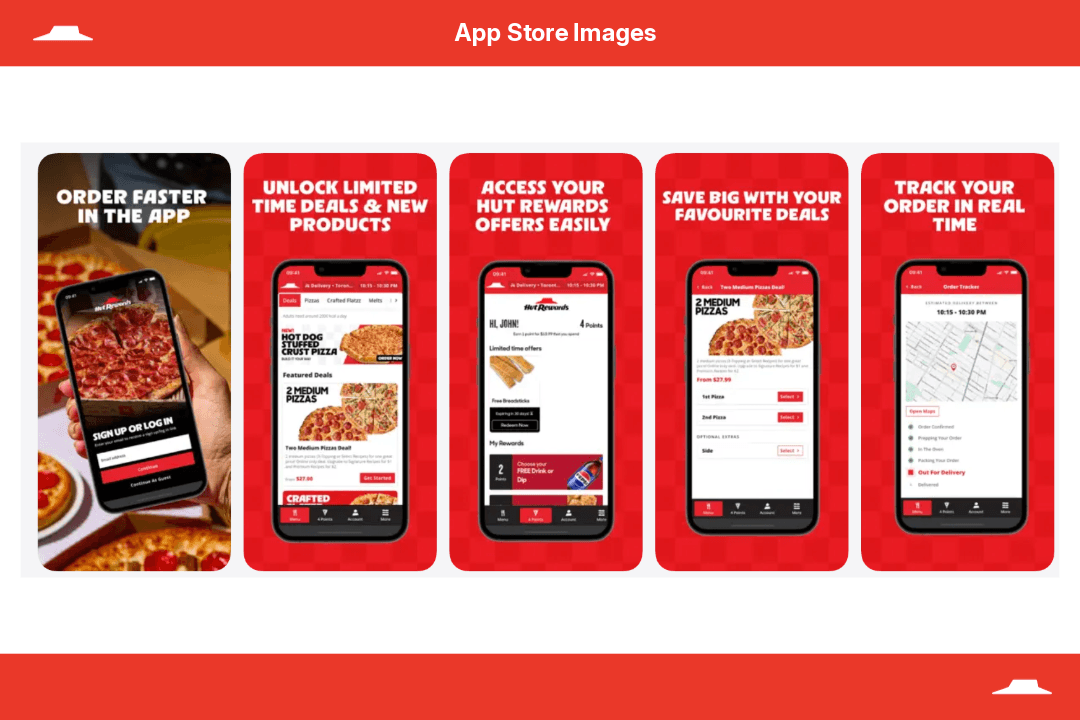
The app followed a similar process, with additional App Store and Google Play preparation, asset validation, production reviews, and release readiness before launch.
✦ Takeaway
Launch is not a handoff; it is an active period of monitoring, validation, and rapid iteration.
Launching Maverick was its own phase of the implementation. We rolled out the web experience first, gradually increasing traffic while monitoring analytics, stability, and user behavior to ensure the platform was performing as expected.
As issues surfaced, I worked closely with product and engineering to make rapid adjustments and keep the rollout moving toward 100% traffic.
The app followed a similar process, with additional App Store and Google Play preparation, asset validation, production reviews, and release readiness before launch.
✦ Takeaway
Launch is not a handoff; it is an active period of monitoring, validation, and rapid iteration.
Launching Maverick was its own phase of the implementation. We rolled out the web experience first, gradually increasing traffic while monitoring analytics, stability, and user behavior to ensure the platform was performing as expected.
As issues surfaced, I worked closely with product and engineering to make rapid adjustments and keep the rollout moving toward 100% traffic.
The app followed a similar process, with additional App Store and Google Play preparation, asset validation, production reviews, and release readiness before launch.
✦ Takeaway
Launch is not a handoff; it is an active period of monitoring, validation, and rapid iteration.
Results across 3 markest
🇲🇽 Mexico
+38.3% same-store online sales in the first full post-launch quarter, alongside improved conversion.
🇨🇦 Canada
+45% YoY app transaction growth during the post-launch period, with continued digital adoption.
🇵🇷 Puerto Rico
Successfully launched the first Pizza Hut Puerto Rico app
Following launch, the platform continued to evolve through research, analytics, and market feedback.
🇲🇽 Mexico
+38.3% same-store online sales in the first full post-launch quarter, alongside improved conversion.
🇨🇦 Canada
+45% YoY app transaction growth during the post-launch period, with continued digital adoption.
🇵🇷 Puerto Rico
Successfully launched the first Pizza Hut Puerto Rico app
Following launch, the platform continued to evolve through research, analytics, and market feedback.
🇲🇽 Mexico
+38.3% same-store online sales in the first full post-launch quarter, alongside improved conversion.
🇨🇦 Canada
+45% YoY app transaction growth during the post-launch period, with continued digital adoption.
🇵🇷 Puerto Rico
Successfully launched the first Pizza Hut Puerto Rico app
Following launch, the platform continued to evolve through research, analytics, and market feedback.
Reflection
This work taught me that scaling a global product is less about making every market identical and more about deciding where consistency creates value and where adaptation is necessary.
By using parity audits and a mature design system library I developed a repeatable approach for bringing this new Pizza Hut experience into new markets without treating every implementation as something new.
✦ The challenge was not designing three different experiences. It was building one experience flexible enough to scale across three different markets.
Digital Product Designer (UX/UI/GROWTH/STRATEGY/DATA)
Digital Product Designer
(UX/UI/GROWTH/STRATEGY/DATA)
Digital Product Designer (UX/UI/GROWTH/STRATEGY/DATA)